
Fossils and prehistory
Reading the rock record
Paleontology and historical geology use fossils and sedimentary layers to reconstruct past life and environments. Each claim rests on observable evidence, and each dating method answers a different question.
How a fossil forms
Mineralized fossils form in sedimentary basins through four broad stages. The sequence below describes the general process; the timing and conditions vary widely between sites.
Stage 01
Burial
Remains are covered quickly by sediment, limiting scavenging and decay.
Stage 02
Mineral infiltration
Groundwater carries dissolved minerals into pores and tissues of the remains.
Stage 03
Replacement
Minerals such as silica or calcite gradually replace original material, preserving its shape.
Stage 04
Exposure
Uplift and erosion bring the rock back to the surface, where it can be found and studied.
Index fossils
Layers as a record of change
Index fossils such as ammonites and trilobites are useful because they lived for limited spans of time and were widespread. When the same species appears in layers across regions, geologists can correlate those rocks.
Relative dating orders layers from older to younger; absolute dating uses radioactive isotopes to estimate numerical ages where suitable material exists. The two methods complement each other.
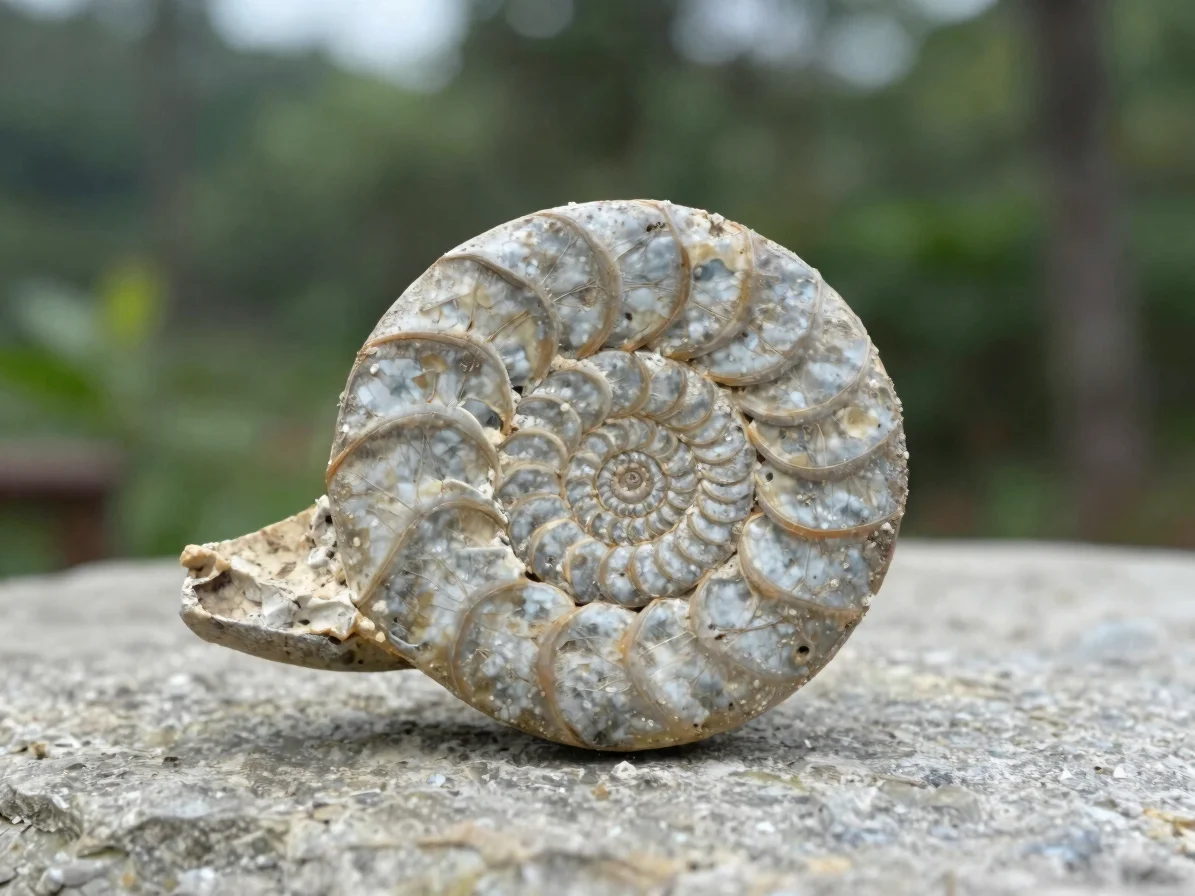
Index fossils help correlate strata; they are not tools for dating a single specimen on their own.