
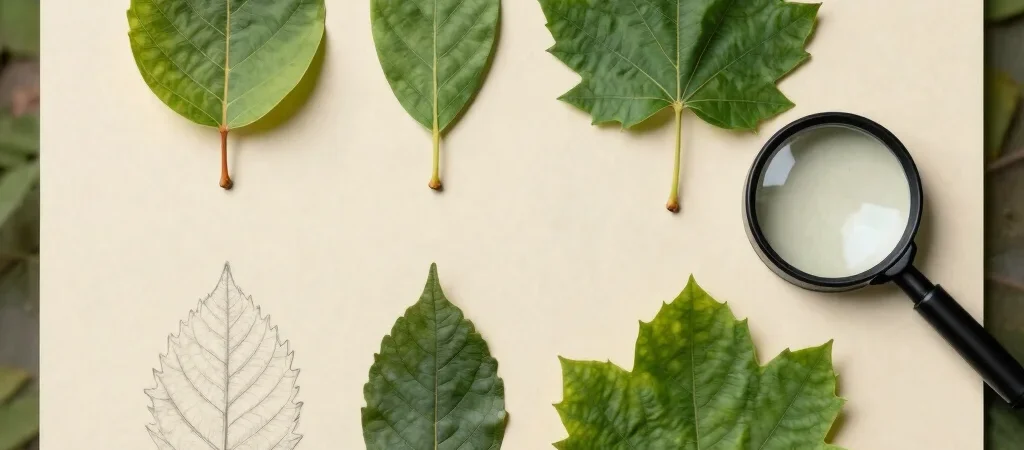
Two leaves picked up beneath the same tree can differ in size, damage, or colour, yet still belong to one plant. That is why botanical observation works best as a comparison of several features rather than a guessing game based on shape alone. A leaf is evidence to describe, not a label waiting to be guessed.
Begin with fallen leaves
For learners around nine and up, collect two or three fallen leaves from each of two nearby plants, where collecting is permitted. You will need paper, a pencil, and a hand lens if available; avoid removing leaves from living plants. Note where each leaf was found, because its setting can help guide later questions.
Compare visible features
Look at the outline, the edge, the tip, and the main veins, then describe each feature in plain words. Is the margin smooth or toothed? Do smaller veins branch from a central vein, or do several strong veins run outward from the leaf base? Make a quick sketch and include the differences between leaves from the same plant.
Keep identification cautious
Many plants share broad leaf features, and leaf appearance can vary with age and growing conditions. A single clue is rarely enough for a confident identification, so compare several leaves and consult a reliable field guide if you want to go further. If the evidence does not support a name, recording “broad, toothed leaf” is more accurate than making a confident guess.
Turn notes into a question
Ask which features stayed similar across the leaves and which changed. Learners can then revisit the same plants in another season and see how the observations differ, without assuming every change has the same cause. Careful descriptions make later identification—and discussion—more useful.